
Posted At: Nov 06, 2025 - 999 Views
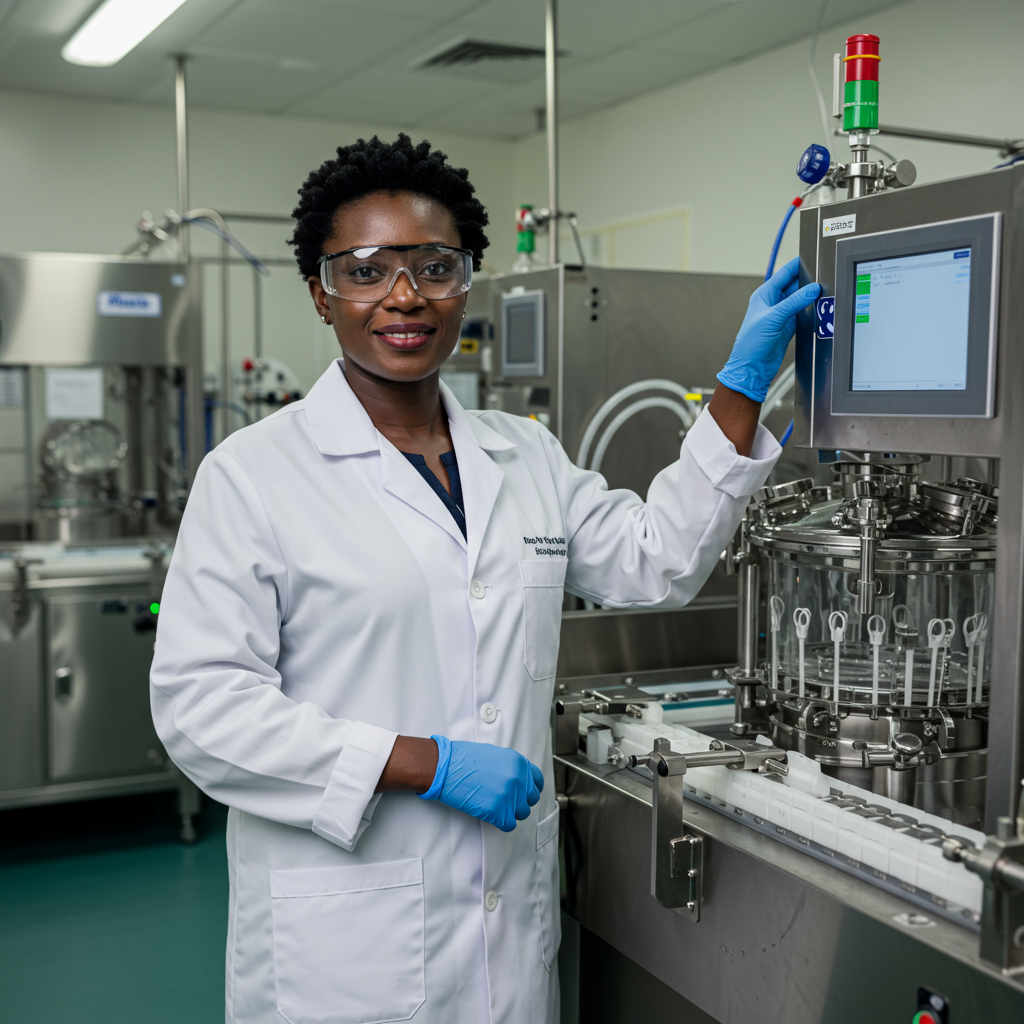
Building Africa's Vaccine Manufacturing Future: Navigating Challenges and Charting Solutions
The Regional Vaccine Manufacturing Collaborative (RVMC) recently released its inaugural Status Report, painting a revealing picture of vaccine manufacturing across three regions: Africa, ASEAN, and Latin America & the Caribbean. The findings underscore a stark reality—while political commitment to African vaccine manufacturing has never been stronger, translating that commitment into sustainable production capacity requires navigating significant technical, regulatory, and market challenges.
The Manufacturing Gap: Where Africa Stands Today
The numbers tell a sobering story. In 2023, regional manufacturers across the three regions accounted for only 10% of vaccine doses commercialized, with Africa producing just 1% of its vaccine needs compared to 29% in ASEAN and 25% in LAC. More critically, African producers currently manufacture only 1 out of 16 regional priority vaccines, highlighting the continent's continued dependence on external suppliers for essential immunization programs.
This manufacturing gap isn't merely about production volumes—it reflects deeper structural challenges across the entire vaccine ecosystem. From regulatory frameworks to workforce capacity, from supply chain reliability to market predictability, Africa's path toward vaccine sovereignty requires addressing multiple interconnected barriers simultaneously.
Challenge 1: Regulatory Fragmentation Without Harmonization
Perhaps the most significant obstacle facing African vaccine manufacturers is the absence of a fully operational harmonized regulatory framework. While the African Medicines Agency (AMA) represents a promising step toward regulatory alignment, progress has been constrained by slow treaty ratification—only 25 of 39 signatory countries have ratified and deposited the treaty as of 2025.
In the interim, WHO Prequalification remains the primary pathway for African manufacturers seeking market access beyond their national borders. This reliance on external certification creates bottlenecks, extends timelines, and increases costs for emerging manufacturers who must navigate both national regulatory requirements and international qualification processes.
The African Medicines Regulatory Harmonisation (AMRH) programme is working to align standards including GMP and quality assurance protocols across member states. In June 2025, eight African NRAs with ML3 status signed a memorandum of understanding signaling intent to establish a regulatory reliance framework. However, the operationalization of AMA's governance and financing structures remains under development, meaning manufacturers continue to face regulatory uncertainty in cross-border approvals.
Without harmonized frameworks, manufacturers experience delays and unpredictability that discourage the long-term investments necessary for sustainable production. The challenge isn't just technical—it's about creating an enabling regulatory environment that balances safety assurance with market accessibility.
Challenge 2: Unpredictable Demand and Fragmented Markets
Even where production capacity exists, African manufacturers face a critical challenge: unpredictable and fragmented regional demand. Unlike Latin America's PAHO Revolving Fund, which procured approximately 224 million vaccine doses in 2024 through pooled procurement, Africa lacks a fully operational regional mechanism to aggregate demand and provide manufacturers with the predictable order volumes essential for sustainable operations.
The RVMC report reveals that median government vaccine expenditure per surviving infant between 2021-2023 was only USD 13.5 in Africa, compared to USD 33.4 in ASEAN and USD 195.1 in LAC. While government immunization spending increased by 11% in Africa during this period, the government share of total immunization spending actually declined from 35% to 21% between 2020-2024, indicating continued heavy reliance on donor financing.
Gavi's African Vaccine Manufacturing Accelerator (AVMA) represents an innovative financing instrument designed to catalyze sustainable growth. However, for funds to be dispersed, manufacturers must first bring products through WHO Prequalification and demonstrate commercial viability—creating a circular challenge where manufacturers need predictable demand to justify investments, but can't access market-shaping mechanisms without first achieving production scale.
The consequence is market uncertainty that discourages long-term investment. Bilateral procurement prices from regional manufacturers averaged 29% higher than PAHO Revolving Fund prices and 41% higher than UNICEF procurement prices in 2024, reflecting the pricing disadvantages faced when operating without pooled procurement mechanisms that provide economies of scale.
Challenge 3: Workforce and Supply Chain Capacity Gaps
Sustainable vaccine manufacturing depends fundamentally on two critical enablers: a specialized regional workforce and reliable supply chains. While workforce development initiatives are underway at institutions like Institut Pasteur Dakar and Biovac in South Africa, the RVMC report notes that limited availability of consistent data makes it difficult to assess progress and identify specific capacity gaps across the continent.
The challenge extends beyond simply training more bioprocess engineers. Building Africa's vaccine manufacturing workforce requires:
- Comprehensive biomanufacturing competency frameworks aligned with international standards
- Technology transfer readiness programs that enable knowledge absorption from global partners
- Regulatory science expertise to navigate both national and international quality systems
- Manufacturing operations capabilities spanning fermentation, purification, fill-finish, and quality control
Supply chain vulnerabilities compound these workforce challenges. Access to critical raw materials and components (upstream supply chain) and efficient vaccine storage, distribution, and delivery systems (downstream supply chain) remain regional priorities that directly impact manufacturing sustainability.
Challenge 4: Technology Transfer Success Rates
Between 2022-2024, technology transfers in Africa showed mixed outcomes. While some COVID-19 vaccine technology transfers progressed, others paused before reaching the market. The RVMC data indicates that technology transfer success depends not only on technical capability but also on the broader ecosystem enablers—regulatory clarity, workforce readiness, supply chain reliability, and market predictability.
None of the producers in the three regions currently operate at the large-scale volumes achieved by major global manufacturers. This scale disadvantage means African-produced vaccines will likely carry higher initial price points until economies of scale and process efficiencies are progressively established—requiring countries to balance affordability considerations with the strategic imperative of building sustainable local capacity.
Pathways Forward: Systematic Solutions for Sustainable Manufacturing
Addressing these interconnected challenges requires coordinated action across multiple fronts:
1. Accelerating Regulatory Harmonization: Expediting AMA operationalization, formalizing regulatory reliance mechanisms, and investing systematically in national regulatory authority capacity will transform political commitment into enabling regulatory environments. Learning from the European Medicines Agency's evolution while adapting frameworks to African contexts can accelerate this process.
2. Establishing Demand Aggregation Mechanisms: Developing Africa's pooled procurement mechanism under Africa CDC leadership can provide manufacturers with the predictable demand necessary for sustainable operations. Clear budgetary commitments and coordinated procurement frameworks must complement rising immunization expenditures.
3. Building Systematic Workforce Capacity: Creating continent-wide biomanufacturing training infrastructure with standardized competency frameworks, coupled with technology transfer support programs that enable knowledge absorption, will address the specialized workforce gap.
4. Strengthening End-to-End Supply Chains: Mapping critical dependencies in both upstream raw material access and downstream distribution systems, then systematically addressing vulnerabilities through strategic partnerships and infrastructure investments.
5. Transparent Investment Tracking: While USD 1.1 billion in annual investments was announced for the three regions between 2021-2024 (with the majority directed toward Africa), actual disbursement data remains limited. Greater transparency on capital flows will enable better assessment of whether announced commitments translate into capacity expansion.
The Path to Health Sovereignty
The RVMC Status Report confirms what practitioners have long understood: building sustainable vaccine manufacturing in Africa requires more than political commitment and capital investment. It demands systematic strengthening of regulatory systems, workforce capacity, supply chain infrastructure, and market mechanisms simultaneously.
The challenges are significant, but not insurmountable. Each barrier represents an opportunity for strategic intervention—whether through regulatory harmonization initiatives, pooled procurement mechanism development, structured capacity building programs, or technology transfer partnerships designed for genuine knowledge transfer rather than mere licensing agreements.
For organizations seeking to support Africa's vaccine manufacturing transformation—whether development partners, regulatory authorities, emerging manufacturers, or technical service providers—success depends on understanding these interconnected challenges and contributing to systematic, sustainable solutions rather than isolated interventions.
Africa's journey toward vaccine sovereignty is not aspirational—it's essential. With the right combination of political will, strategic investment, technical expertise, and ecosystem coordination, the continent can build the manufacturing capacity necessary to ensure timely access, health security, and vaccine equity for its populations.
EMKEI Innovations supports Africa's vaccine manufacturing transformation through strategic consultancy, regulatory system strengthening, and bioprocessing capacity building. Our approach combines deep technical expertise with practical understanding of African operational realities to help development partners, regulatory authorities, and manufacturers navigate the complex path toward sustainable local production. Contact us at mwai.ngibuini@emkei.org to discuss how we can support your vaccine manufacturing initiatives